

STAGE IQ Articles
STAGE IQ Articles

FBT: from a musician's gig to a school stage
From its Recanati workshops to school stages in Lithuania: meet FBT, explore its portable sound systems and see installations by Stage IQ.

DPA 6388 CORE+: a directional headset microphone for demanding stages
Imagine a typical situation on stage. One moment, an actor is speaking almost in a whisper; the next, they raise their voice, turn their head or move closer to a stage monitor. Music is playing, other performers are moving nearby and the audience can be heard in the room. The listener should not notice any of this technical complexity – they should simply hear the voice clearly. A headset microphone therefore has to do far more than may be obvious at first glance. It must stay securely in place as the wearer moves, help separate the voice from surrounding sound sources, reduce the risk of acoustic feedback and preserve a natural tone. It also needs to be comfortable, visually discreet and durable enough for everyday professional use. The new DPA 6388 CORE+ directional headset microphone was created for precisely these conditions. This supercardioid model is designed for theatre, live performance, television and radio broadcast, sports commentary, conferences and houses of worship. DPA 6388 brings together a new directional capsule, CORE+ technology and the refined Act headset. The most important development, however, is not any single specification. The microphone was designed as a complete system in which the capsule’s directionality, acoustic axis, working distance and headset construction all work together. When does a directional microphone become essential? Omnidirectional headset microphones are valued for their natural sound and ease of use. In a quiet, well-controlled environment, they are often an excellent choice. The situation changes when ambient sound on stage increases, a performer moves closer to the loudspeakers or many microphones are used at the same time. In these circumstances, a directional capsule helps reduce the amount of sound from monitors, instruments, other speakers and the audience that reaches the microphone signal. The sound engineer gets more of the intended voice and less of the stage environment, allowing the microphone to be brought to a higher level while reducing the risk of acoustic feedback. DPA 6388 is a pre-polarised condenser microphone operating on the pressure-gradient principle. The difference between the sound reaching the front and rear of the capsule makes its directional characteristic possible, but it also makes the design more dependent on position, frequency and distance. A directional headset microphone is not simply an omnidirectional model with a narrower pickup area. Its design requires many interrelated characteristics to be balanced: directionality at different frequencies, rejection of sound outside the primary axis, proximity effect, sensitivity to capsule position, self-noise, dynamic range and resistance to breath and wind noise. Improving one characteristic can compromise another. A very narrow pickup area may help isolate the voice, but it can also make the microphone excessively sensitive to precise positioning. Making the capsule even smaller may increase self-noise or compromise directional control and wind resistance. A high maximum SPL alone also says nothing about how the microphone will perform with quiet speech. The idea behind DPA 6388 is not to maximise one parameter, but to find a practical balance between all of them. In other words, it aims to provide the isolation of a directional microphone without some of the drawbacks that users would normally have to accept. An angled acoustic axis: the capsule is not pointing where it appears to be One of the most interesting features of DPA 6388 is its asymmetrical capsule design and angled acoustic axis. The microphone head may physically appear to point forwards, but the direction of maximum sensitivity is deliberately angled towards the mouth. The microphone is optimised for use approximately 3 cm from the corner of the mouth – the so-called “smile corner”. This position keeps the capsule beside the mouth rather than directly in front of it. The microphone obscures less of the face, is not aimed directly into the airflow and remains better protected from breath noise and plosive consonants. This design has another practical benefit. With a conventional directional microphone, even a small change in position can alter the level or tone of the voice. The acoustic design of DPA 6388 reduces this sensitivity, helping it deliver more consistent results for different users and in different fitting conditions. This is particularly important in productions where many performers need to be prepared at the same time and microphones must be fitted quickly. There is not always enough time to adjust every capsule with millimetre precision and test it at length. Less dependence on an ideal position means both faster preparation and fewer unexpected changes in sound during a performance. The recommended 3 cm distance still matters. Moving the capsule closer increases the low-frequency response through the proximity effect, which can make the voice sound fuller or excessively rich. Moving the microphone farther away reduces the low frequencies. DPA 6388 provides greater practical tolerance, but it does not eliminate the laws of acoustics. Directionality matters beyond 1 kHz A microphone’s directional characteristic is often described with a single word, such as cardioid or supercardioid. Its real-world behaviour, however, also depends on frequency. Two models with apparently similar polar-pattern specifications can react very differently on stage. Some directional microphones gradually lose directionality at high frequencies. This allows more ambient sound to reach the capsule in precisely the frequency range that is important for speech clarity. DPA 6388 is designed to maintain controlled directionality across a wider frequency range, including the high frequencies. The sound arriving away from the primary axis is equally important. If a microphone strongly reduces some frequencies at a particular angle while allowing others through, the ambient sound takes on an unnatural colouration. Such a signal can be more difficult to correct, and in a system with several open microphones it can make the overall mix even more complicated. DPA 6388 is designed to reject sources outside its primary pickup direction while maintaining a more even frequency balance in the rejected sound. For the sound engineer, this means more predictable behaviour, a more natural-sounding ambience and a more stable system in challenging acoustic environments. CORE+ technology works where the signal begins The DPA 6388 capsule incorporates CORE+ by DPA technology. This is not digital audio processing or an effect applied later in the signal chain. The technology operates inside the microphone capsule itself – at the point where acoustic sound is converted into an electrical signal. Speech and vocal levels are constantly changing. A quiet sentence may be followed immediately by a shout, or a calm dialogue by a powerful musical passage. The microphone must capture these changes accurately without introducing unnecessary distortion. DPA 6388 offers a typical dynamic range of 117 dB and a maximum peak SPL of 144 dB. These figures show that the microphone can handle a very wide range of voice levels. The value of CORE+, however, is best understood by listening: lower distortion helps preserve the character of the voice, the clarity of consonants and its natural dynamics. The sound engineer can then shape the performer’s sound at the console instead of first correcting inaccuracies introduced by the capsule. You can learn more about how this technology works in our article “DPA CORE+ technology”. Why is the capsule not even smaller? On stage and in front of cameras, the least visible microphone is often preferred, which naturally raises a question: why not make the directional capsule even smaller? The DPA 6388 microphone head measures Ø 6.3 × 13.3 mm. It is compact, but it was not designed to achieve the smallest possible dimensions at any cost. A directional microphone needs a certain amount of physical volume to control directionality, self-noise, distortion, proximity effect and resistance to airflow. Reducing the capsule further would require compromises in precisely the areas for which a directional microphone is chosen. The visual discretion of DPA 6388 is therefore achieved through more than simply reducing the capsule size. Its angled acoustic axis allows the capsule to be positioned beside the mouth, the non-reflective PVD finish reacts less to stage lighting, and the transparent headset retainers are less visible against skin and hair. This is a more practical approach than sacrificing acoustic performance to save a few millimetres. A refined Act headset for everyday work Even an excellent capsule cannot deliver consistent results if the microphone moves on the wearer’s head. DPA 6388 therefore uses the refined Act headset. This is not a completely new construction, but an evolution of the experience gained with the long-established 4066 and 4088 models, developed in response to practical user feedback. The Act platform is designed for quick fitting and the most stable possible hold. The headset size, boom length and ear-hook shape can be adjusted, while the boom itself can be mounted on either the left or right side. The rigid frame helps maintain the chosen position even when the wearer is moving actively. The revised ear-hook shape follows the natural contours of the head and ears more closely, while soft, rounded tips distribute pressure more evenly. Increased friction in the retainers helps preserve the selected adjustment, so the microphone does not need to be constantly repositioned. Transparent retainers are less noticeable on camera and on the theatre stage. The PVD finish on the headset and microphone boom does not reflect bright stage lighting, while the cable is routed at a 90° angle at the rear. This reduces strain at sensitive points in the cable and allows it to be guided neatly downwards. The complete assembly, including the cable and MicroLock connector, weighs approximately 15 g. The microphone capsule is rated IP58 for protection against dust and moisture – an important quality when working with perspiration, make-up, outdoor events and intensive everyday use. A case designed for more than transport In a large theatre production or broadcast, performance on the wearer is not the only consideration. It is equally important that a technician can quickly find the correct colour, capsule and connector version, and pack everything away safely after the event. The updated zipped case supplied with DPA 6388 is slightly larger, so the microphone and accessories are not compressed. A transparent window makes it possible to identify the microphone type, colour and connector without opening the case, while a separate label pocket protects the identification from wear. An elastic strap secures the microphone quickly without additional moulded inserts. It may not be the most impressive line in the specifications, but in everyday rental, theatre and broadcast work, details like these save time and reduce the risk of selecting the wrong variant. Two sizes, three colours and four connectors DPA 6388 is available in Standard and Small sizes. The size does not change the capsule, microphone boom or acoustic specifications – the difference lies in the geometry of the headset and how it fits the wearer’s head. Standard size is designed to fit most adults. Small size is intended for children and users who need a more compact-fitting headset. Both headset sizes can be adjusted further. Choosing the correct size matters for more than comfort: a well-fitting headset helps the capsule maintain its intended distance and angle as the wearer moves or turns their head. The microphone is available in black, brown or beige, allowing it to be matched to stage costumes, skin tone, hair or the filming environment. All three colours are offered in both sizes. Four connector versions are available: MicroLock – DPA’s modular connector, used with a DPA adapter made for the relevant wireless system; 3-pin LEMO – for compatible transmitters with a 3-pin LEMO microphone input; TA4F Mini-XLR – for compatible transmitters with a 4-pin TA4F connector; Mini-Jack – a version with a locking 3.5 mm connector for compatible wireless transmitters. The connector version must be selected according to the wireless transmitter in use. A similar-looking connector does not guarantee compatible pin wiring or power requirements, so it is worth checking before ordering if there is any uncertainty. The choice of three colours, two sizes and four connector types creates 24 specific product variants. You can find every available version on the DPA 6388 CORE+ product page. Where does DPA 6388 perform at its best? Theatre and musical productions A theatre production may use many wireless microphones at the same time, with actors constantly moving while the orchestra, stage monitors and other performers can all be heard nearby. Voice isolation matters, but so does achieving consistent results when performers change or a microphone must be prepared quickly. The directional capsule, greater positioning tolerance and stable headset address precisely these challenges. You can read more about other DPA solutions for this field in our article “Theatre with DPA Microphones”. Live performance For vocalists, presenters and stage performers, a headset microphone provides freedom of movement without having to hold a microphone. On a loud stage, however, an omnidirectional capsule may pick up too much from the monitors, instruments and the stage as a whole. The supercardioid characteristic of DPA 6388 helps keep the voice at the front of the mix, even in a challenging sound-reinforcement system. Broadcast and sports commentary The environment at a sporting event or live television broadcast is rarely quiet. The audience, event sound and people speaking nearby all compete with the commentator’s voice, and there is no time for corrections in post-production. Controlled directionality, speech intelligibility and the ability to achieve consistent results quickly are particularly valuable here. The non-reflective finish and visually discreet construction are also important on camera. Conferences and houses of worship In these spaces, the speaker is often close to the loudspeakers and may have little experience using a microphone. They may turn their head, touch the headset or fit the microphone imperfectly. Lower sensitivity to position changes and a stable fit help maintain more consistent results, while the directional capsule gives the sound-reinforcement system more room to operate. Does DPA 6388 replace DPA 4088? DPA 6388 is not simply a new name for 4088, nor is it intended to replace every earlier DPA directional model automatically. The 4088, 4288 and 4488 use a cardioid capsule, while the 6388 uses a more tightly focused supercardioid design with an angled acoustic axis. The 4088 family remains relevant wherever its balance of directionality, size and construction best matches the task. The 6388 expands the choice for situations that require greater isolation, more stable operation close to loudspeakers and better control of directionality across a wider frequency range. Both product families retain the natural sound associated with DPA, allowing them to be used in the same production. The key question is not simply which model is newer, but the acoustic environment in which it will be used. The essence of DPA 6388: fewer compromises on a real stage DPA 6388 CORE+ is compelling not because of a single record-breaking figure, but because of the way its different solutions complement one another. The supercardioid capsule helps isolate the voice, more consistent directionality preserves a more natural ambient sound, the angled acoustic axis provides greater freedom in positioning, and CORE+ technology accurately captures both quiet and extremely powerful voices. The refined Act headset keeps this acoustic system where it was adjusted to be. The choice of colours, sizes and connectors allows the microphone to be matched to the individual performer and wireless system, while the redesigned case makes everyday work behind the scenes easier. This is a professional tool for situations in which the audience should hear the person – not the technical work taking place around the microphone. Explore DPA 6388 CORE+ colours, sizes and connector variants in the Stage IQ store. If you are unsure which size or connector is compatible with your wireless microphone system, contact us at info@stageiq.lt or call +370 636 55536. Stage IQSound, lighting and stage solutionsBaltupio St. 71A, Vilnius+370 636 55536info@stageiq.lt

KRK Studio Monitors: The Yellow Studio Icon
Watch enough studio footage and sooner or later two yellow circles will appear in the background. Sometimes they sit in a large commercial control room. Sometimes they are on a modest desk beside a laptop. KRK monitors are instantly recognisable, even to people who could not explain the difference between a studio monitor and a conventional hi-fi speaker. The bold design helped KRK stand out, but colour alone does not sustain a brand for almost four decades. KRK monitors found their way into professional recording studios and thousands of smaller production rooms. ROKIT became one of the best-known studio monitor ranges in the world, while the yellow woofer developed into a visual shorthand for music production itself. You can now find KRK studio monitors at Stage IQ. Before choosing a pair, however, it is worth looking beyond old assumptions. The current ROKIT G5, KREATE and V Series ranges serve different kinds of studios. The difference between a 5, 7 and 8 inch monitor also matters, and the room can influence what you hear just as much as the monitor itself. KRK ROKIT 5 G5. The most compact model in the fifth-generation ROKIT range A studio monitor should not flatter the music A home audio speaker is usually designed to make music enjoyable. A manufacturer may add a little weight to the bass, soften a harsh recording or create a greater sense of space. There is nothing wrong with that. It is simply what the speaker is designed to do. A studio monitor has a different job. It needs to reveal what is actually happening in the recording. Is the vocal too loud? Are the bass guitar and kick drum competing for the same space? Does the reverb linger too long? Is there enough room for each instrument in the stereo image? The less a monitor hides, the fewer unpleasant surprises remain when the track is played in a car, through headphones or on a phone. This is why a good studio monitor may not be the most impressive speaker in the first minute of listening. Its value becomes clear after several hours of work, when decisions come more quickly and mixes require fewer corrections on other playback systems. KRK began with a practical problem KRK was founded in 1986 by Keith Rowland Klawitter, a film sound engineer who felt that the monitors available at the time did not let him work with the precision he needed. Instead of accepting the limitation, he began building his own speakers in a garage in Huntington Beach, California. His initials appeared on the first designs: K. R. K. The early monitors were built in small numbers for fellow engineers. The active Exposé range, introduced in 1996, helped establish KRK in professional studios. In 2005, the first active ROKIT range arrived at exactly the right moment for the fast-growing home studio market. More music was being made on computers, but a professional monitoring setup still often meant a separate amplifier, expensive passive speakers and a fair amount of technical knowledge. ROKIT offered a more direct route. The amplifiers were built into the cabinets, connection to an audio interface was straightforward, and the price made serious monitoring accessible beyond large commercial studios. How did the yellow cone become a studio icon? The yellow woofer gradually became KRK's signature. It remains visible in a dim control room and is immediately recognisable in photographs and videos, but the colour is only part of the story. Current ROKIT G5 monitors use a woven Kevlar® aramid fibre cone. A light, rigid diaphragm is easier to control, helping reduce unwanted resonances and improve definition. That strong visual identity had an interesting side effect. As more ROKIT monitors appeared in producer studios, live streams and artist interviews, the sound of one particular generation was often attributed to the brand as a whole. Even now, KRK is sometimes described as a bass-heavy choice intended only for electronic music. Earlier ROKIT generations did have a more pronounced character that appealed to many hip-hop and electronic music producers. The fifth generation is a far more flexible design. One monitor can now support several stages of the creative process, and its response can be adjusted to suit its position in the room. ROKIT G5 listening modes are more than a brochure feature Current KRK ROKIT G5 monitors offer three listening modes. Their value makes more sense in a real session than it does in a specification table. Mix provides a flatter frequency and phase response. This is the main setting for mixing, mastering and judging the overall balance of a track. Focus brings the midrange forward. This is where much of the information in vocals, guitars, keyboards and acoustic instruments sits. The mode makes it easier to hear when several parts are masking one another. Create is intended for writing, arranging and producing, when maintaining creative momentum matters as much as analysing every detail. A practical workflow might look like this: write and arrange in Create mode, shape the main balance in Mix mode, then use Focus mode to inspect the relationship between vocals and instruments. This does not replace a second pair of monitors or checks on other playback systems, but it does provide another useful perspective at the press of a button. The rear DSP offers 25 combinations of boundary and equalisation settings. They are useful when monitors need to sit near a wall, on a desk or in another less than ideal position. Expectations should remain realistic, though. Electronic correction can reduce an excess in a specific frequency range, but it cannot remove flutter echo from bare walls or repair a poor listening position. The ROKIT G5 DSP display provides access to listening modes and room adjustment settings ROKIT Generation Five: official overview This official KRK video demonstrates the ROKIT G5 listening modes, DSP controls and the main design choices behind the fifth generation. What is the difference between 5, 7 and 8 inch monitors? The number in the model name refers to the approximate diameter of the woofer in inches. A larger cone will generally reach lower frequencies and produce a higher sound pressure level. It will also excite the room more strongly at low frequencies. For that reason, an 8 inch monitor in a small room is not automatically an upgrade over a 5 inch model. Before choosing, consider three things: how far you will sit from the monitors, how much space you have behind and around them, and whether the room provides even basic control of reflections and low frequencies. KRK ROKIT 5 G5: for compact workspaces and close listeningThe 5 inch model makes sense when the monitors sit on a desk, the listening distance is short and the room is not large. Its frequency response extends from 54 Hz to 30 kHz at ±3 dB, covering most of the information needed to judge a mix while offering less insight into the lowest octave of bass-heavy electronic music. In a small room, that can be an advantage rather than a limitation. There is less excess low-frequency energy for the room to exaggerate. KRK ROKIT 7 G5: deeper bass without leaving the nearfield formatThe 7 inch version reaches down to 45 Hz at ±3 dB. It reveals more of the bass guitar, kick drum and lower synthesiser registers while remaining compact enough for many medium-sized home and project studios. It is a sensible step when the ROKIT 5 does not extend low enough for your work, but adding a separate subwoofer is not yet part of the plan. KRK ROKIT 8 G5: for a larger, better controlled roomThe 8 inch model reaches down to 42 Hz at ±3 dB, with an extended low-frequency response to 32 Hz. It provides more information at the bottom of the spectrum and can reach a higher sound pressure level. It makes sense when there is enough room around the monitors, the listening distance is greater and low frequencies are not left entirely uncontrolled. In a small untreated room, deeper extension can make decisions harder rather than easier. One practical detail is worth remembering. The ROKIT 5 G5, ROKIT 7 G5 and ROKIT 8 G5 are sold individually. A stereo setup requires two matching monitors. KREATE, V Series and subwoofers: where do the other KRK ranges fit? ROKIT is the best-known KRK family, but it is not the answer for every workspace. The current range also includes simpler systems for a first creative setup, more advanced monitors for critical work and dedicated subwoofers for extending the system at the bottom end. KRK KREATE 3: a complete compact system in one boxKREATE 3 combines an active left monitor with a passive right monitor, so the pair requires only one mains connection. Inputs include balanced 6.35 mm TRS, RCA and 3.5 mm AUX, along with Bluetooth 5.3. It is a practical option for a small production desk, video editing, podcasting or anyone who wants to begin with one straightforward package. Unlike the other monitors discussed here, KREATE 3 is sold as a pair. KRK KREATE 3. An active and passive monitor pair for a compact workspace KREATE 5 and KREATE 8: when you need a larger individual monitorThese models retain the straightforward approach of the KREATE range, but each monitor is active and sold separately. KREATE 5 suits a smaller workspace, while KREATE 8 is intended for a larger room and offers deeper low-frequency extension. A light-coloured KREATE 5 Latte is also available for spaces where the equipment forms a visible part of the interior. KRK V4S4 and KRK V8S4: for more demanding professional workV Series is built for recording, mixing and mastering sessions where consistent reproduction and more extensive room adjustment take priority. The compact V4S4 offers 49 EQ combinations and 85 watts of total power. V8S4 is designed for a larger workspace where greater extension and higher sound pressure levels are required. KRK V4S4. A compact V Series monitor for professional nearfield work KRK S8.4, S10.4 and S12.4: extending the low-frequency range of the systemA studio subwoofer is not there simply to make everything sound bigger. When properly integrated, it reveals frequencies that a smaller main monitor cannot reproduce and reduces the low-frequency workload placed on that monitor. The result depends directly on positioning, crossover settings and the room. A poorly integrated subwoofer creates more uncertainty, not more accuracy. Before switching on: five choices that strongly affect the sound Even well-chosen monitors cannot perform at their best if they are placed at random. You do not need a complex measurement system to get started. A few basic decisions can improve the result considerably. Sit midway between the monitors. The left monitor, right monitor and listening position should form an approximate equilateral triangle. Keep the tweeters at ear height. If the monitors sit too high or too low, the perceived treble balance and stereo image will change. Keep the left and right sides symmetrical. Placing one monitor beside a wall and the other in open space will almost always produce a different response from each side. Do not place the monitors directly on a lightweight hollow desk. The cabinet can transfer vibration into the furniture, which then adds its own sound. The foam isolation pads supplied with ROKIT G5 monitors help reduce this effect and allow the angle to be adjusted. Fix the position before reaching for DSP. Moving a monitor a few centimetres away from a wall or corner can change the bass balance more than a single equaliser setting. It is also worth working at more than one volume level. At lower levels, it is often easier to judge the relationship between the vocal, melody and main instruments. If a mix only holds together when played loudly, the problem is unlikely to be a lack of monitor power. How do you choose without guessing? Start with the workspace, not the model number. For a small room and close listening distance, ROKIT 5 G5 or the compact KREATE 3 pair will often be the most sensible options. If you need more information in the low end and the room allows more freedom of placement, ROKIT 7 G5 is worth considering. ROKIT 8 G5 and V8S4 make the most sense where there is more space and at least some acoustic control. A subwoofer is best treated as a later stage in the development of the monitoring system, not as an automatic addition to the first pair of monitors. In a small untreated room, smaller monitors placed correctly will often produce a more dependable result. Explore the full KRK range available from Stage IQ. If you are unsure which range or size suits your workspace, contact us with the room dimensions, planned listening distance and the main type of work you do. With that information, we can narrow down the options based on real conditions rather than the largest number on the front panel. Stage IQSound, lighting and stage solutionsBaltupio St. 71A, Vilnius+370 636 55536info@stageiq.lt

sE Electronics Microphones: From Studio to Stage
A microphone may seem like a simple starting point in the audio chain, but in practice it defines a lot: vocal presence, instrument body, room character, noise control and how much work will be left for mixing. A good microphone is not just a technical accessory. It is the decision that shapes the entire recording or live sound result from the very beginning. sE Electronics is a manufacturer that fits this logic very well. Its range includes microphones for home studios, professional recording, live sound, drums, guitar amplifiers, podcasts, streaming and video production. This is not a brand focused on only one type of microphone. It offers clear tools for different real-world audio applications. In the Stage IQ assortment, sE Electronics has an important place because its products work well for project studios, live sound setups and professional recording chains. You can find our full selection here: sE Electronics microphones and accessories at Stage IQ. Quick guide: which sE Electronics microphone should you choose? For home studio and vocals: X1-S Vocal Pack or X1-S Studio Bundle. For live vocals: V7 Black, V7 Switch or V3. For drums and guitar amplifiers: V7-X, V BEAT, V BEAT Black or V KICK Black. For podcasts and streaming: DynaCaster DCM8, DCM6 DynaCaster or NEOM USB. For acoustic instruments and stereo recording: sE8 Pair, sE7 Pair or sE8 Omni Matched Pair. For a smoother studio character: VR1, VR2 or X1 R. A brand focused on real-world audio work Microphones are often described too simply: condenser, dynamic, USB, stage, studio. In reality, the difference starts much earlier. It starts with the capsule, diaphragm, magnets, transformers, electronics, body construction and the way the microphone reacts to real sound, not just to a technical specification table. The strength of sE Electronics is not only in attractive design or well-known model names. The manufacturer pays serious attention to capsules, construction and how microphones behave in real working conditions. In the studio, that means detail, low noise and useful sound character. On stage, it means directionality, durability and less struggle with unwanted sound. A microphone is the first place where sound becomes an electrical signal. If detail, body or natural tone are lost at this stage, they cannot be fully restored later with EQ, compression or an expensive mixing console. That is why choosing the right microphone is not a minor detail. It is one of the most important parts of the entire audio chain. Interesting fact: sE Electronics changed not only microphones, but also home studio culture The X1-S Studio Bundle shows the practical side of sE Electronics: a microphone, acoustic screen, shock mount and accessories in one studio package. For many home studios, the biggest problem was never only the microphone. The problem was the room. Even a good voice and a quality microphone can sound too reflective, flat or uncontrolled in an ordinary space. Bare walls, glass, floors, ceilings and furniture create reflections that enter the microphone together with the voice. This is where sE Electronics became highly visible with its Reflexion Filter concept. These solutions helped home studio and project studio users control sound more effectively around the microphone itself. It does not turn a poor room into a perfect studio, but it can reduce some early reflections and make recording more controlled. This philosophy is clearly visible in the sE Electronics X1-S Studio Bundle. It is not just a microphone in a box. It is a practical starting point for someone who wants to record vocals, speech or instruments more cleanly, without searching for every accessory separately. X1-S bundles: when you need a practical starting point, not theory One common mistake is buying a microphone as a single isolated item. You buy the microphone, then realise you also need a shock mount, pop filter, suitable stand, cable, audio interface and an understanding of why the recording still captures too much room sound. This is where bundles make practical sense. The sE Electronics X1-S Vocal Pack is designed for vocals and spoken voice. It is a good option for someone who wants to start recording more properly without assembling the whole microphone chain piece by piece. The sE Electronics X1-S Studio Bundle is a broader choice for a home studio, small project space, musician recording ideas or content creator who needs better voice quality. These bundles reflect the reality of modern music production. Many good recordings today do not start in a large commercial studio. They start in a small room. What matters is not whether the room looks like a legendary recording studio. What matters is whether the first part of the signal chain is good enough to capture the idea properly. For higher-end studios: RNT, Gemini II and Z5600a II The RNT is the result of collaboration between sE Electronics and Rupert Neve Designs, created for high-end vocal, instrument and studio recording. When a studio needs not only a clean signal but also character, higher-end microphones become important. At this level, frequency range and sensitivity are not the only things that matter. It is also about how the voice sits in the mix, how the microphone handles dynamics and whether the recording already has musicality before processing begins. The sE Electronics RNT Rupert Neve Signature is made for exactly this type of situation. The Rupert Neve name is strongly associated with the history of analogue audio equipment, preamps, transformers and musical sound character. For that reason, the RNT is not simply “another more expensive microphone”. It is a studio tool for users who are deliberately looking for a higher level of sound. In the same direction, it is worth considering the sE Electronics Gemini II and sE Electronics Z5600a II. Tube microphones are not an automatic guarantee that everything will sound better, but when chosen correctly, they can give a voice more body, warmth, harmonic richness and studio character. These microphones are not meant to be used everywhere. They are part of a studio’s tonal palette. One voice may need a cleaner and more precise microphone, while another needs something denser, warmer and more expressive. This is why a professional studio usually needs more than one microphone. Stage use: why the V Series is not just another dynamic microphone On stage, a microphone must not only sound good. It must also handle monitors, noise, movement and intensive use. A stage microphone lives in a different world from a studio microphone. In the studio, you can stop, change the angle, move the stand, turn off a noisy device or ask the performer to repeat the take. On stage, that luxury often does not exist. There are monitors, drums, guitar amplifiers, room noise, hand movement, cables, drops, fast soundchecks and performers who need to focus on the performance, not on how the microphone behaves. That is why live microphones need more than a nice sound. They need directionality, reliability and control over unwanted noise. The sE Electronics V7 Black is one of the clearest choices for live vocals. If a switch is needed, the sE Electronics V7 Switch is a practical alternative. If the priority is a simpler but solid stage solution for everyday use, the sE Electronics V3 or sE Electronics V2 Switch are worth considering. In short, the V Series is suitable when a microphone needs to do more than look good on a specification sheet. It has to work in a real venue: rehearsal room, club, school, event space, conference setup or professional concert. Drums and guitar amplifiers: when the microphone has to handle pressure Drums and guitar amplifiers require microphones that can handle high sound pressure, fast attack and demanding stage conditions. Vocals are difficult because of detail. Drums and guitar amplifiers are difficult because of energy. These are loud, fast and aggressive sources that place very different demands on a microphone. Here, sensitivity alone is not enough. The microphone must handle high sound pressure, impact, vibration and unwanted spill. For instruments, the sE Electronics V7-X is an important model in the Stage IQ assortment. It is a dynamic instrument microphone suitable for guitar amplifiers, drums, brass instruments and other loud sources. For drums, the relevant models include sE Electronics V BEAT, sE Electronics V BEAT Black and sE Electronics V KICK Black. These are not universal microphones that “might work somehow”. They are tools designed for specific tasks. A well-chosen microphone saves a lot of work later. If the kick drum, toms or guitar cabinet are captured poorly, mixing becomes a process of fixing problems that began at the source. The right microphone helps deliver a clearer and more controllable signal from the beginning. Small-diaphragm microphones: precision, space and acoustic instruments Matched small-diaphragm microphone pairs are used when accurate stereo image, natural sound and fast transient response matter. Not every good microphone has to look visually impressive. Some of the most important studio tools are almost understated. Small-diaphragm condenser microphones often belong to this category: they do not create a strong visual effect, but they do their job with accuracy. In the Stage IQ assortment, this area includes the sE Electronics sE8 instrument microphones, sE Electronics sE8 Omni matched pair, sE Electronics sE7 instrument microphones and sE Electronics sE7 sideFire pair. These microphones are highly useful for acoustic guitar, piano, strings, percussion, overheads, choir, chamber music and stereo recording. They are important when the goal is not to exaggerate the sound, but to capture what is already happening in the air. Matched pairs are especially important for stereo recording. If two microphones react differently, the stereo image can become unstable. When recording acoustic guitar, piano or room ambience, spatial accuracy can be the difference between a natural recording and a flat one. Ribbon microphones: an old principle that still has something to say Ribbon microphones are often chosen when a smoother, more natural and less aggressive sound is needed. Ribbon microphones are an interesting contrast to the modern idea that everything should be brighter and more detailed. They often sound smoother, more natural and less aggressive. That does not make them less professional. On the contrary, their character gives them a very clear role in the studio. Stage IQ offers several sE Electronics ribbon models: sE Electronics VR1, sE Electronics VR2 and sE Electronics X1 R. Ribbon microphones are especially interesting for guitar amplifiers, brass instruments, strings, drum room sound and situations where harshness needs to be reduced. Sometimes they achieve what EQ cannot: capturing the source in a more pleasing way before it reaches the mix. These are not microphones for everyone and everything. A ribbon microphone is usually chosen deliberately, when the goal is a specific character: a smoother top end, more natural instrument body and a less aggressive tone. Podcasts, streaming and the modern voice Today, microphones are not only for musicians. Podcasts, streaming, YouTube and online teaching also depend on good voice sound. Today, microphones are not only for musicians. They are used by podcast creators, video producers, lecturers, streamers, voice-over artists, educators and anyone whose voice becomes part of the content. For this use case, it is worth looking at the sE Electronics DynaCaster DCM8, sE Electronics DCM6 DynaCaster and sE Electronics NEOM USB. Dynamic microphones are often a good choice for voice in imperfect rooms because they usually capture the surrounding environment less aggressively than highly sensitive condenser microphones. This matters for podcasts or streaming setups where the room is not professionally treated. The NEOM USB is relevant when a simpler path to good sound is preferred. Not everyone needs an audio interface, separate preamp and complex signal chain from the start. Sometimes the main priority is to begin creating quickly and cleanly. Video sound: shotgun microphones for interviews, filming and content creation Good sound is critical in video content: viewers may tolerate imperfect lighting, but unclear or distant speech is much harder to accept. Poor sound in video content is often noticed faster than average image quality. Viewers may forgive imperfect lighting, but they rarely tolerate distant, reverberant or unclear speech. That is why a shotgun microphone is often one of the most important tools for video creators. In the Stage IQ assortment, this category includes the sE Electronics sE6160 shotgun microphone and the sE Electronics sE6160 shotgun microphone matched pair. Shotgun microphones are useful for interviews, filming, event recording, documentary work, video production and situations where the sound needs to be focused on a specific source. The goal is not to “hear everything”. The goal is to capture what matters most. Why sE Electronics fits the Stage IQ assortment Stage IQ works with professional audio, lighting and stage equipment, so microphones are not random shelf products here. They are one of the most important parts of the entire sound system. A poorly chosen microphone can compromise even a good loudspeaker system. A well-chosen microphone allows the whole chain to work more effectively. sE Electronics fits this logic because the manufacturer does not offer one “universal miracle”, but a range of clearly different tools for different situations: studio vocals, live vocals, drums, guitars, podcasts, video sound, stereo recording, ribbon character and higher-end studio work. If you are building a first home studio, it makes sense to start with the X1-S Vocal Pack or X1-S Studio Bundle. For live sound, logical choices include the V7 Black, V7 Switch or V3. For drums and guitar amplifiers, consider the V7-X, V BEAT and V KICK Black. If your studio needs more character, this is where the RNT Rupert Neve Signature, Z5600a II, Gemini II and ribbon microphones become relevant. These tools are not chosen because of a single specification. They are chosen for the way they help shape the final sound. Final thought: a good microphone is not a luxury, it is the beginning of sound Sound always starts with the source: the performer, the instrument, the room and the microphone. Everything that happens afterwards is work with that signal. That is why a microphone is not the last purchase in a system. Very often, it is the first serious decision that defines the rest of the chain. sE Electronics is interesting because its range includes both practical, accessible solutions and serious studio microphones with a clear sound character. This is a manufacturer that is useful not only for filling a technical specification, but for real work with voice, instruments, stage sound, content creation and recording. You can find the full sE Electronics range in the Stage IQ online store: sE Electronics microphones and accessories.
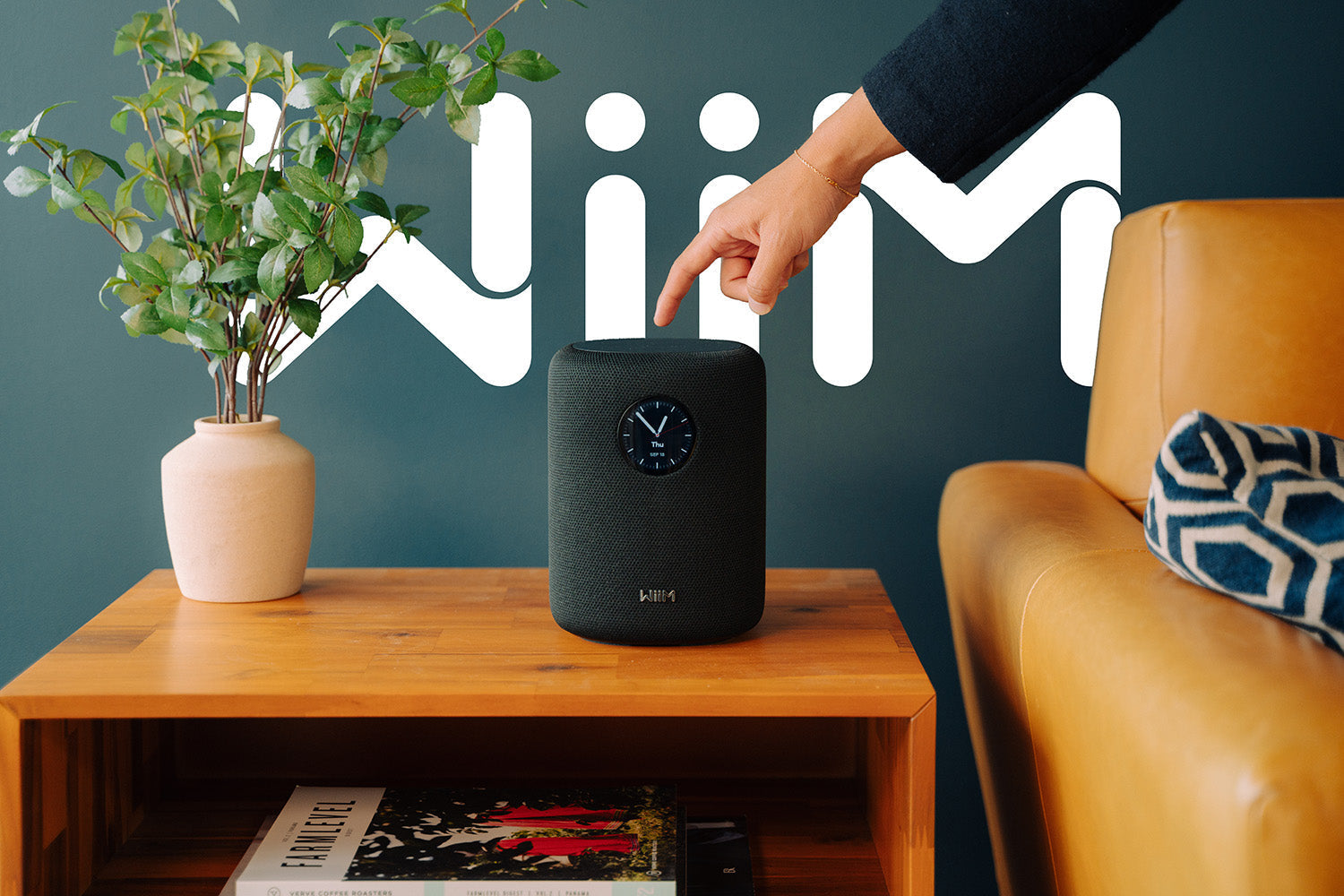
WiiM Home Audio
Over the past few years, WiiM has become a home audio standard for those who want high-quality sound without compromising on price. We review the entire range, from Mini to Amp Ultra and Sub Pro.

Theatre with DPA Microphones
How sound becomes invisible on the theatre stage. We review the use of DPA 4060, 4061, 4071, 4466, 4488 and 4099 microphones in professional theatre sound systems.

König & Meyer Stands
For 75 years, the German company K&M has been manufacturing stands that have become the global stage standard. Microphone, speaker, music, instrument, and keyboard stands – all stage infrastructure from one manufacturer.

Look Solutions Lithuania
German Look Solutions fog generators are used from Broadway to Hollywood. Viper, Orka, Tiny series, and Unique 2.1 hazer, officially available in Lithuania through Stage IQ.

Allen & Heath: 55 Years on Stage
A British company that has been developing audio mixers for professionals since 1969. QU, SQ, CQ series and Xone DJ mixers with 96 kHz XCVI processor.

The New Era of DPA N-Series
DPA Microphones introduces N-Series, a new digital wireless microphone system for professionals. Revolutionary transparency and reliability on stage and in the studio.

Electro-Harmonix Pedals
A guitar effects company that has been shaping the sound of rock, jazz, and electronic music since 1968. Classic and contemporary Electro-Harmonix pedals in one place.

Takamine Arrived at Stage IQ
Takamine Guitars: Japanese Quality, Built for the Stage When it comes to acoustic guitars, many first think of old American brands. However, in the professional world, Takamine has held a very strong position for several decades. This is a manufacturer whose history, philosophy, and technical solutions were formed not in marketing departments, but in the real work of musicians. Takamine guitars arose from a very specific need: to create an acoustic guitar that would sound reliable, stable, and predictable on stage. Today, the name Takamine is associated with live sound, professional electronics, and guitars that are made to be played, not just to look beautiful. From a Small Japanese Town to Global Stages Takamine's history begins in 1959 in Japan, in Gifu Prefecture, near Mount Takamine, from which the manufacturer's name originated. Initially, it was a small workshop whose main goal was not mass production, but rather the repair and improvement of instruments. This period very strongly shaped Takamine's entire mindset. Working with musicians' guitars, the craftsmen clearly saw what playing musicians truly needed. Not a collector's item, but a reliable working tool. This approach became the cornerstone for all subsequent development of Takamine. In the 1970s and 1980s, Takamine began to actively produce its own acoustic guitars and gradually made its way into the international market. The breakthrough occurred when the manufacturer very clearly focused on stage use. Why Takamine Guitars Are Considered Stage Guitars One of the most important distinctions of Takamine is that this manufacturer was one of the first to seriously invest in acoustic guitar amplification. While many manufacturers tried to simply adapt existing solutions, Takamine began to develop its own electronics from scratch. Takamine was among the first to use undersaddle piezo elements along with specially adapted preamplifiers. This allowed them to achieve what had been greatly lacking until then: a clear, stable signal without unpredictable feedback. This is why Takamine guitars so quickly gained popularity among touring musicians. They simply worked. Without complicated solutions, without constant compromises. Electronics as Takamine's Trademark To this day, Takamine electronics are considered among the strongest on the market. The manufacturer develops its own preamplifiers and matches them to the specific construction of the guitars. This is not universal electronics added merely to check a box in the specifications. Takamine preamplifiers are valued for several reasons: stable signal, clear dynamics, convenient stage control, and a reliable built-in tuner. This is especially important for live musicians who need quick and precise sound control. It's also important that Takamine has never aimed to make guitars overly aggressive or artificially bright. Their amplified sound is oriented towards naturalness and transparency, which easily fits into the overall mix. Materials and Construction When it comes to the guitars themselves, Takamine maintains a fairly classic approach, but implements it with great meticulousness. The top plate is usually made of spruce or cedar, depending on the model and intended use. The back and sides can be made of mahogany, maple, or other tonewoods. Takamine is known for its very consistent build quality. Even mid-range models feature good intonation, stability, and a comfortable neck. This is especially appreciated by musicians who play live extensively and want an instrument that won't let them down after a year or two of intensive use. Series for Different Musicians Takamine's assortment is clearly categorized according to needs. G Series guitars are aimed at beginner and intermediate musicians. This is a very popular series due to its good price-to-quality ratio. These guitars often become the first serious acoustic instrument with electronics. Pro Series is designed for professionals and stage musicians. This series features higher-grade materials, more complex construction, and advanced electronics. These are guitars that easily travel to large stages and studios. Signature models are created in collaboration with specific artists and reflect their playing style and needs. Who Plays Takamine Guitars The list of Takamine guitar users is very extensive and impressive. This manufacturer never aggressively advertised, but musicians themselves chose this brand. Among the famous artists playing Takamine guitars, you can find Bruce Springsteen, Jon Bon Jovi, Garth Brooks, members of Eagles, and many other touring musicians. The important thing is that most of them chose Takamine not for the name, but for its practicality. Stable sound, fewer problems on stage, and long-term reliability. Interesting Facts About Takamine One of the more interesting facts is that Takamine guitars were used in large arenas for a long time, even when many other acoustic guitars simply couldn't handle the sound there. Takamine was also one of the first to seriously consider how an acoustic guitar behaves when mixed with a full band. The sound of their guitars is often described as easily manageable on the mixing console side. Another interesting aspect is that Takamine has very consistently maintained a Japanese approach to quality. Even with partial production moved to other countries, quality control remained extremely strict. Why Takamine Is Relevant Today Today, with the acoustic guitar market overflowing with choices, Takamine remains in a very clear position. These are guitars for musicians who play. Not for collectors, not for display cases, but for the stage, rehearsals, and studio. Takamine doesn't offer tricks or short-lived trends. They offer instruments that reliably do their job. That's why this name has remained relevant for over sixty years. Why Takamine Is Part of the Stage IQ Assortment Stage IQ solutions emphasize a reliable, professional, and practical approach to sound. Takamine guitars naturally fit into this philosophy. These are instruments designed to work with a sound system, not against it. For musicians seeking an acoustic guitar with reliable electronics and a clear, controllable sound, Takamine is one of the most logical choices. Stage IQSound, lighting, and stage solutions Address: Baltupio g. 71A, VilniusEmail: info@stageiq.lt


