

DPA Microphones for Theatre: How Sound Becomes Invisible
In theatre, sound must perform an impossible task: be heard everywhere and seen nowhere. An audience member in the front row cannot see a single microphone, yet must hear every whisper from the back of the stage. An actor must dance, cry, shout, and laugh, and the microphone must capture it accurately and consistently, whether sewn into a costume, hidden in hair, or attached to an ear.
DPA Microphones has been developing solutions for this requirement for decades. Today, their microphones are the standard on Broadway, in London's West End, at the Metropolitan Opera, and in hundreds of other professional theatres worldwide. STAGEIQ.LT is the sole official representative of DPA Microphones in Lithuania, ensuring that all Lithuanian theatres, institutions, and event sound specialists find a competent partner with direct access to the manufacturer's entire product range.
Why the Theatre Stage Is One of the Most Demanding Environments for a Microphone
Theatre sound specialists face conditions almost unparalleled elsewhere. An actor sweats under hot spotlights, changes costumes in 30 seconds, and may whisper quietly and sing loudly in the same performance. A capsule that cannot withstand moisture will not survive a second season. A microphone that rustles from costume friction or reflects stage lighting will ruin the show.
The orchestra pit adds another dimension: dozens of instruments in a small space, each with its own dynamics, all close to each other. Choirs, ambient sounds, and soloists all require different solutions simultaneously.
DPA understands this environment better than almost any other manufacturer, and this is evident in both the technical specifications of their products and the logic behind their product selection.
Body Microphones: A Different Model for Different Positions
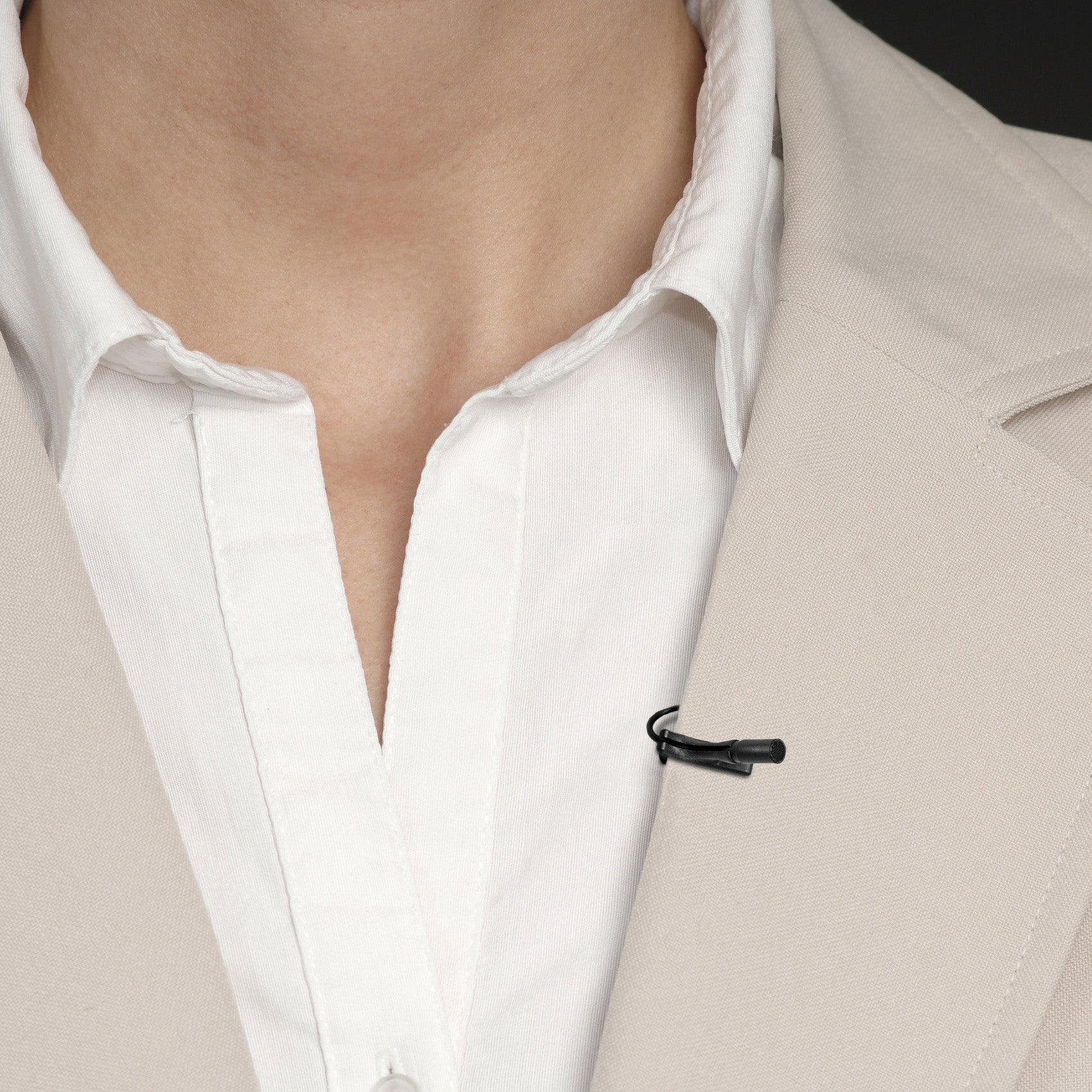
The most common mistake in theatre sound departments: purchasing one lavalier model and using it everywhere. DPA offers different models for different mounting positions, and that difference is purely acoustic.
When a microphone is attached to the chest or lapel, the sound pressure level (SPL) is one. When the same microphone is attached to the forehead or hairline, closer to the mouth, the SPL is about 10 dB higher. A capsule not adapted to this difference will produce a distorted or overloaded signal.
The 4060 CORE+ is a high-sensitivity model designed for chest and costume positions. Its flat frequency response delivers a natural, uncolored voice directly to the mixer.
The 4061 CORE+ is acoustically identical to the 4060 but 10 dB less sensitive. It is designed specifically for hairline, forehead, or ear positions where SPL is higher. This is the standard when the capsule needs to be as close to the mouth as possible but invisible.
The 4071 CORE+ is a specialist for chest positions. It features a built-in low-cut filter at 100 Hz and a frequency boost of about 5 dB at 4–6 kHz to enhance vowel clarity. In chest positions, consonant frequencies are naturally attenuated, making speech less intelligible. The 4071 compensates for this acoustically, without additional EQ on the mixer.
All three models feature the latest CORE+ technology, which eliminates distortion across the entire dynamic range, IP58 protection against moisture and sweat, and the new MicroLock connector.
When Even 5mm Is Too Much: The 6060 Series
There are productions where any visible element on an actor's face or body is unacceptable. Contemporary minimalist theatre, stages close to the audience, closer filming: this is where the 6060 and 6061 subminiature microphones with a 3mm capsule come in. The three-millimeter capsule is practically invisible even from very close up, and thanks to CORE technology, its noise level and dynamic range meet 5mm standards.
Head-Mounted Microphones: 4466 and 4488
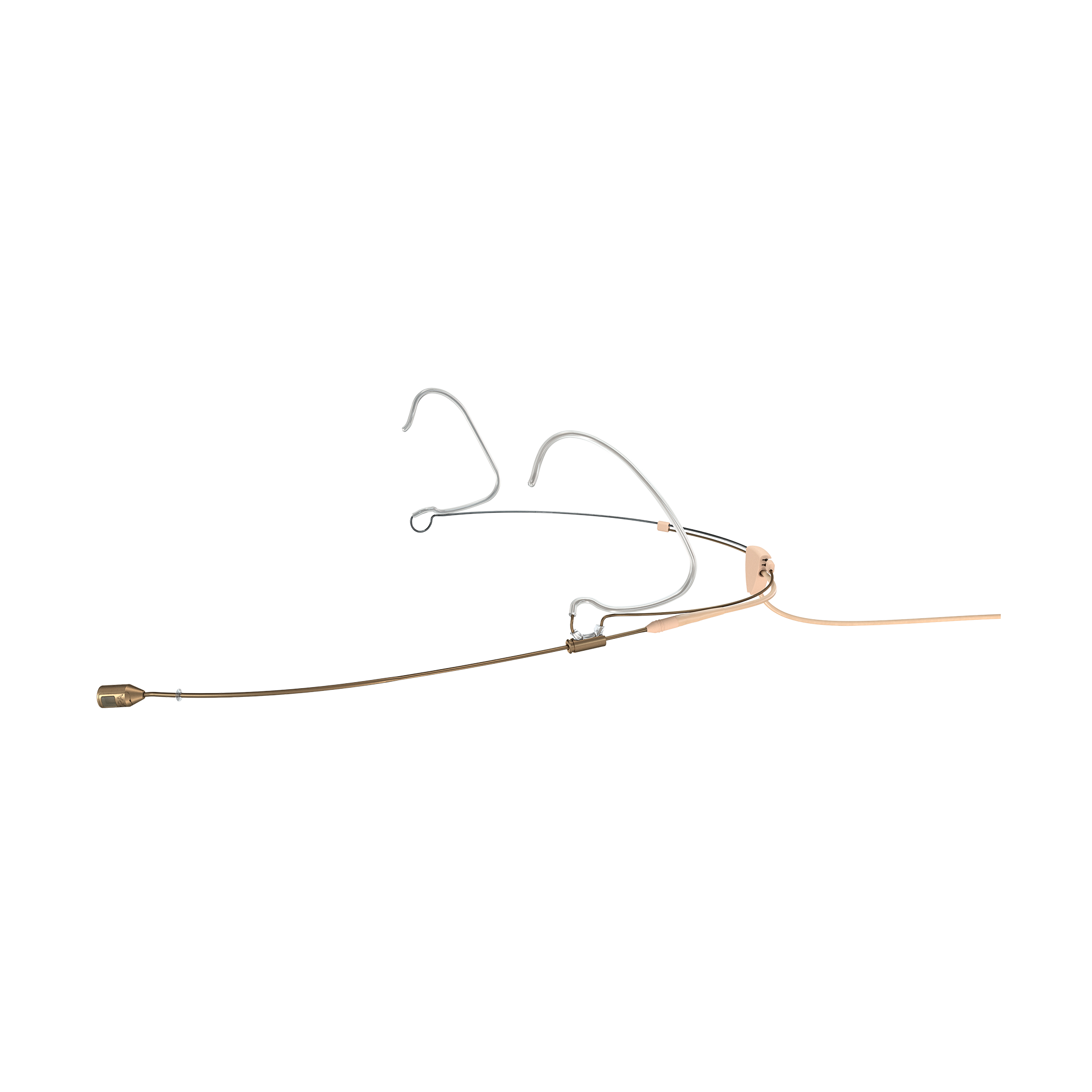
A head-mounted microphone offers one crucial advantage over a body microphone: a fixed distance from the mouth. When the microphone is always in the same place, the sound level and timbre are predictable and consistent throughout the performance.
The 4466 (omni) and 4488 CORE+ (cardioid) are the modern generation of DPA head-mounted microphones with 5mm capsules and a Red Dot design award-winning earhook mechanism. The earhook system touches the ear at three points, the boom length is adjustable, and left-right transfer takes just a few seconds. This is practically important for theatre technicians who need to transfer a microphone from one actor to another during quick costume changes.
Both models are IP58 certified and feature a PVD coating. The PVD coating absorbs up to 98% of stage lighting and practically does not reflect spotlights. This is not an aesthetic solution but a practical one: fewer reflections mean a less noticeable microphone, even from the front row.
Which model is more suitable? The omni 4466 is more forgiving in terms of positioning and transmits the voice consistently even if the actor leans or turns their head. The cardioid 4488 CORE+ rejects more background noise and provides greater feedback resistance in loud scenes or musicals where stage monitor levels are high.
When even a 5mm capsule is too visible, the 6066 subminiature headset with a 3mm capsule is the most discreet solution in this category.
The Orchestra Pit: 4099 CORE+ for the Entire Orchestra
In the theatre orchestra pit, instruments are very close to each other, the space often reflects sound, and the sound engineer manages dozens of channels. The 4099 CORE+ instrumental microphone is the main solution for this situation. Its supercardioid polar pattern effectively isolates each instrument from neighboring sources, and mounting directly to the instrument with special clips eliminates the need for stands and additional cables.
What makes the 4099 CORE+ particularly valuable for an orchestra is its consistency: all 4099s for violins, cellos, saxophones, and brass have identical sound characteristics. In the mixer, several dozens of these microphones sound homogeneous and coherent. The clip program covers practically every instrument: violin, cello, guitar, bass, saxophone, trumpet, trombone, and drums.
For pianos, the DPK2015 stereo kit is suitable, with two 2015 wide cardioid microphones and mounting solutions for both grand and upright pianos, with open or closed lids.
MicroLock: A Protected Long-Term Investment
Many Lithuanian theatres have wireless systems from different eras and manufacturers. DPA's new MicroLock connector solves this problem simply: one microphone works with all major wireless platforms via adapters. When changing a wireless system, the microphones remain the same. Only the adapters change.
On a theatre scale, where twenty or more microphones are daily work tools, this is an important financial argument. Investing in DPA microphones protects against a situation where a new wireless system requires updating the entire microphone fleet. It is also worth knowing that DPA also has its own wireless system: we wrote about the N-Series digital wireless system in a separate article.
DPA and Lithuanian Theatres
Lithuania has its own theatre culture with high standards: the Lithuanian National Drama Theatre, the Lithuanian National Opera and Ballet Theatre, the State Youth Theatre, Oskaras Koršunovas Theatre, and numerous regional stages. For each of them, DPA has a suitable solution, whether it's a dramatic production, opera, or musical.
As the sole official DPA representative in Lithuania, STAGEIQ.LT offers not only products but also a direct connection to DPA in Denmark: the full official range, original accessories, and manufacturer's warranty. If you are planning to purchase DPA microphones for a theatre project or wish to discuss a specific solution based on stage type, wireless system, and budget, our team can help.
Can't find the DPA Microphones product you're looking for? Contact us: info@stageiq.lt or +370 636 55536.


