

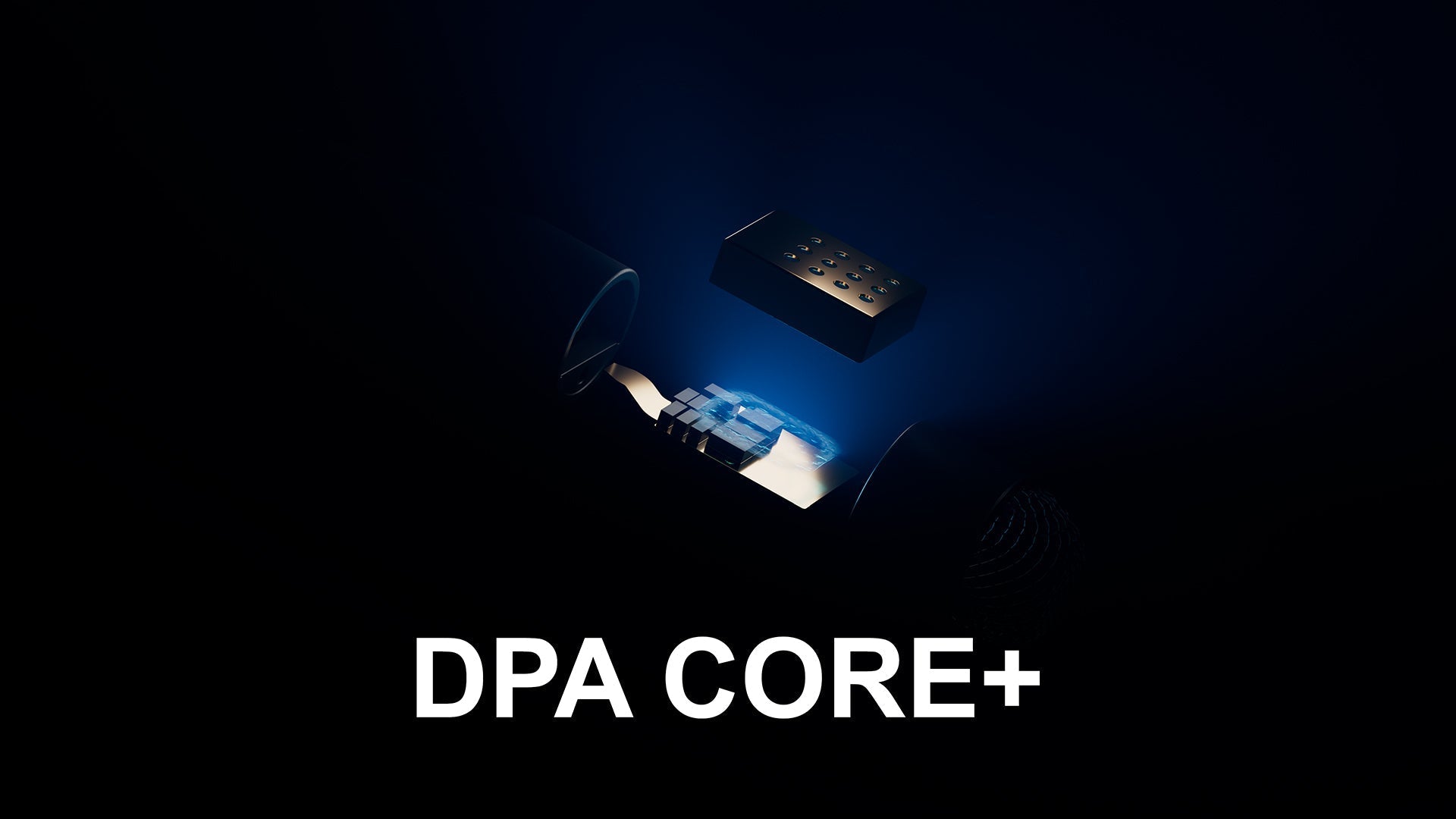
DPA CORE+ Technology: Why Small Improvements Make a Big Difference
In professional audio technology, it's usually not the most striking solutions that win, but those that allow for stable, predictable, and uneventful work. Most experienced audio specialists know that the difference between "good" and "very good" sound often lies not in obvious things, but in subtleties that only become apparent during prolonged use.
DPA CORE+ technology is precisely such an improvement. It doesn't change the microphone's sound, alter its frequency range, or add any "character." Instead, it addresses a very specific, but often unstated problem – how precisely the microphone transmits a signal when the sound is constantly changing.
In this article, we will explain what CORE+ technology is, how it differs from the previous CORE version, and why this difference is genuinely audible when working with speech, vocals, acoustic instruments, in theatre, and in broadcasting.
Why Specifications Don't Always Tell the Whole Story
When choosing a microphone, technical characteristics such as noise level, maximum sound pressure, and frequency range are usually considered. These are important parameters, but in practice, it often happens that two microphones with very similar specifications behave differently in real-world use.
One might sound clearer and more stable, while the other might require more corrections, quickly "fatigue" the listener, or struggle with dynamic speech. These differences often cannot be explained solely by the numbers in a specification table.
In practice, this relates to how the microphone capsule behaves with a fluctuating signal. Speech, vocals, or acoustic instruments never sound even – the sound constantly changes, with quiet and sudden moments occurring. It is in such situations that the microphone's accuracy, or lack thereof, becomes apparent.
What CORE Technology Was
CORE technology was DPA's response to this problem. Its goal was to improve the capsule's performance in dynamic situations and reduce microphone-introduced inaccuracies that arise not from overload, but from the capsule's own behavior.
In practice, this yielded a very clear result: the sound became more stable, less "broken" in quiet passages, and when working with speech, the need for aggressive EQ correction or strong compression just to make the signal intelligible was reduced.
For many professionals, this was already a sufficient improvement. However, when working in complex acoustic situations, there remained areas where the capsule's behavior could still be enhanced.
What CORE+ Technology Is
CORE+ technology is a further step in the same direction. It is not digital processing, it is not DSP, and it is not any "post-recording signal correction." CORE+ operates within the microphone capsule itself – where sound is first converted into an electrical signal.
The main goal of CORE+ is to transmit a fluctuating signal even more accurately in complex situations, especially when very quiet moments overlap with sudden changes in sound. It was in such areas that previous capsules could sometimes behave less stably.
CORE+ allows the capsule to work more smoothly, so the microphone "loses control" less in dynamic passages. This is not an effect you will always hear in the first minute, but it is very clearly felt during prolonged use.
How This Sounds in Real-World Use
Audio specialists usually describe the effect of CORE+ very simply: it's easier to work with such a microphone. The sound remains clearer, more stable, and more predictable, especially when working with speech or live vocals.
This is especially important in theatre, broadcasting, and events where sound must be intelligible not just for a brief moment, but for a long time. A lower amount of microphone-introduced inaccuracies means less listener fatigue and less stress for the sound engineer themselves.
Why CORE+ Is Particularly Relevant for Small-Format Microphones
In small-format microphones, physical compromises are inevitable. Due to the small size of the capsule, any inaccuracy becomes audible more quickly than in large studio microphones.
CORE+ technology allows such capsules to operate in a more stable zone, making them more reliable in everyday, complex situations – from theatre performances to live broadcasts or live sound events.
Conclusion: Why CORE+ Is Important in Practice
CORE+ technology is not a solution that fundamentally changes the microphone's sound or makes it "different." It does not change the frequency range, add character, or create an effect. Instead, it does what is often most important in professional audio technology – it helps the microphone work more accurately and stably in real, dynamic conditions.
Such improvements are most valued not in short tests, but in daily work: in long performances, broadcasts, events, or complex acoustic spaces. A lower amount of microphone-introduced inaccuracies means not only clearer sound but also less fatigue for both the listener and the sound specialist.
This is precisely why CORE+ technology is not designed "to create an impression." It is intended for those who value a predictable, reliable result and the ability to focus on content, rather than constantly solving technical problems. This is the main reason why such seemingly small technological improvements eventually become the standard in a professional environment.
Stage IQ
Audio, lighting and stage solutions
Address: Baltupio g. 71A, Vilnius
Email: info@stageiq.lt


