

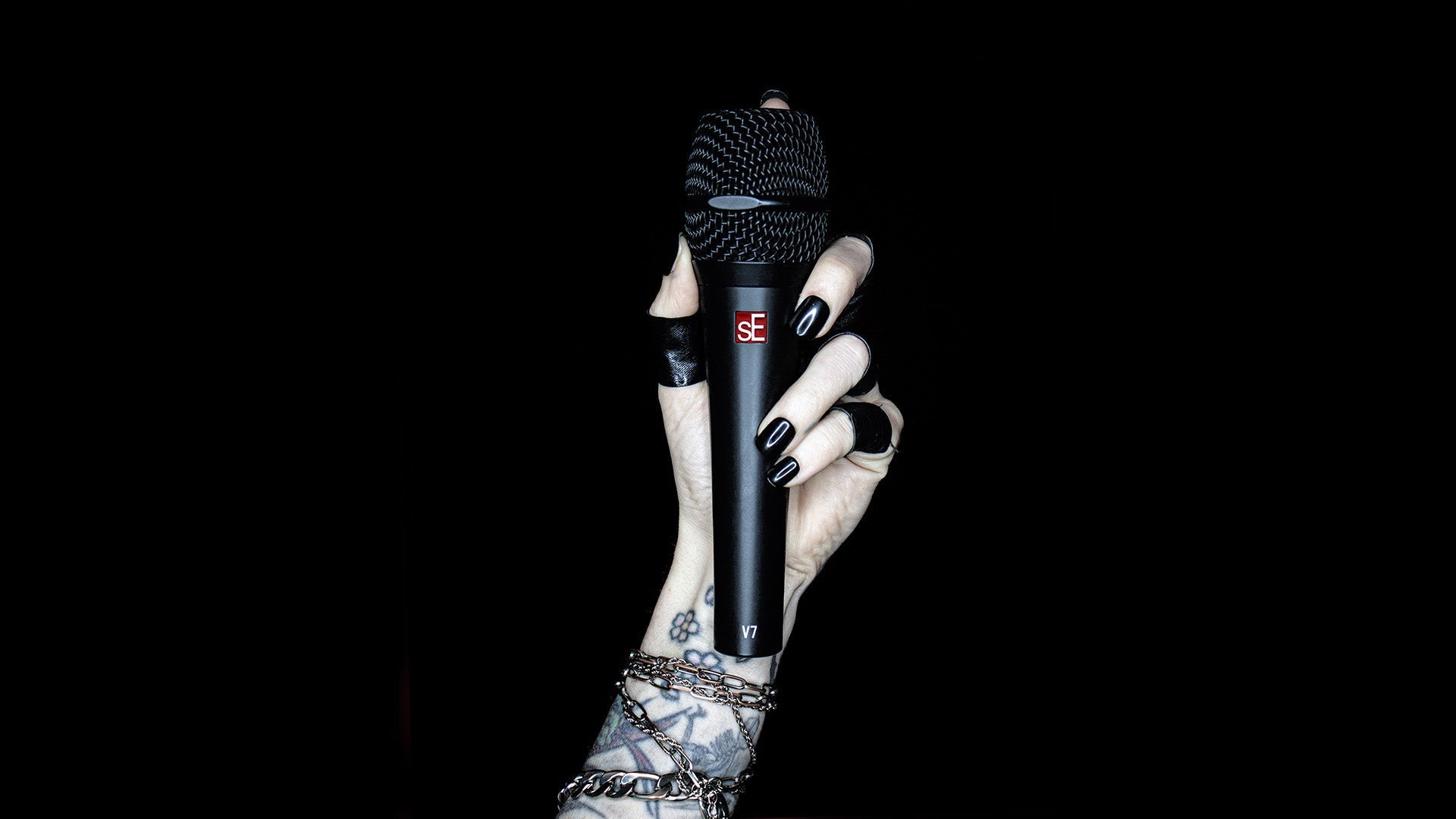
A microphone may seem like a simple starting point in the audio chain, but in practice it defines a lot: vocal presence, instrument body, room character, noise control and how much work will be left for mixing. A good microphone is not just a technical accessory. It is the decision that shapes the entire recording or live sound result from the very beginning.
sE Electronics is a manufacturer that fits this logic very well. Its range includes microphones for home studios, professional recording, live sound, drums, guitar amplifiers, podcasts, streaming and video production. This is not a brand focused on only one type of microphone. It offers clear tools for different real-world audio applications.
In the Stage IQ assortment, sE Electronics has an important place because its products work well for project studios, live sound setups and professional recording chains. You can find our full selection here: sE Electronics microphones and accessories at Stage IQ.
Quick guide: which sE Electronics microphone should you choose?
- For home studio and vocals: X1-S Vocal Pack or X1-S Studio Bundle.
- For live vocals: V7 Black, V7 Switch or V3.
- For drums and guitar amplifiers: V7-X, V BEAT, V BEAT Black or V KICK Black.
- For podcasts and streaming: DynaCaster DCM8, DCM6 DynaCaster or NEOM USB.
- For acoustic instruments and stereo recording: sE8 Pair, sE7 Pair or sE8 Omni Matched Pair.
- For a smoother studio character: VR1, VR2 or X1 R.
A brand focused on real-world audio work
Microphones are often described too simply: condenser, dynamic, USB, stage, studio. In reality, the difference starts much earlier. It starts with the capsule, diaphragm, magnets, transformers, electronics, body construction and the way the microphone reacts to real sound, not just to a technical specification table.
The strength of sE Electronics is not only in attractive design or well-known model names. The manufacturer pays serious attention to capsules, construction and how microphones behave in real working conditions. In the studio, that means detail, low noise and useful sound character. On stage, it means directionality, durability and less struggle with unwanted sound.
A microphone is the first place where sound becomes an electrical signal. If detail, body or natural tone are lost at this stage, they cannot be fully restored later with EQ, compression or an expensive mixing console. That is why choosing the right microphone is not a minor detail. It is one of the most important parts of the entire audio chain.
Interesting fact: sE Electronics changed not only microphones, but also home studio culture

For many home studios, the biggest problem was never only the microphone. The problem was the room. Even a good voice and a quality microphone can sound too reflective, flat or uncontrolled in an ordinary space. Bare walls, glass, floors, ceilings and furniture create reflections that enter the microphone together with the voice.
This is where sE Electronics became highly visible with its Reflexion Filter concept. These solutions helped home studio and project studio users control sound more effectively around the microphone itself. It does not turn a poor room into a perfect studio, but it can reduce some early reflections and make recording more controlled.
This philosophy is clearly visible in the sE Electronics X1-S Studio Bundle. It is not just a microphone in a box. It is a practical starting point for someone who wants to record vocals, speech or instruments more cleanly, without searching for every accessory separately.
X1-S bundles: when you need a practical starting point, not theory
One common mistake is buying a microphone as a single isolated item. You buy the microphone, then realise you also need a shock mount, pop filter, suitable stand, cable, audio interface and an understanding of why the recording still captures too much room sound.
This is where bundles make practical sense. The sE Electronics X1-S Vocal Pack is designed for vocals and spoken voice. It is a good option for someone who wants to start recording more properly without assembling the whole microphone chain piece by piece.
The sE Electronics X1-S Studio Bundle is a broader choice for a home studio, small project space, musician recording ideas or content creator who needs better voice quality.
These bundles reflect the reality of modern music production. Many good recordings today do not start in a large commercial studio. They start in a small room. What matters is not whether the room looks like a legendary recording studio. What matters is whether the first part of the signal chain is good enough to capture the idea properly.
For higher-end studios: RNT, Gemini II and Z5600a II

When a studio needs not only a clean signal but also character, higher-end microphones become important. At this level, frequency range and sensitivity are not the only things that matter. It is also about how the voice sits in the mix, how the microphone handles dynamics and whether the recording already has musicality before processing begins.
The sE Electronics RNT Rupert Neve Signature is made for exactly this type of situation. The Rupert Neve name is strongly associated with the history of analogue audio equipment, preamps, transformers and musical sound character. For that reason, the RNT is not simply “another more expensive microphone”. It is a studio tool for users who are deliberately looking for a higher level of sound.
In the same direction, it is worth considering the sE Electronics Gemini II and sE Electronics Z5600a II. Tube microphones are not an automatic guarantee that everything will sound better, but when chosen correctly, they can give a voice more body, warmth, harmonic richness and studio character.
These microphones are not meant to be used everywhere. They are part of a studio’s tonal palette. One voice may need a cleaner and more precise microphone, while another needs something denser, warmer and more expressive. This is why a professional studio usually needs more than one microphone.
Stage use: why the V Series is not just another dynamic microphone

A stage microphone lives in a different world from a studio microphone. In the studio, you can stop, change the angle, move the stand, turn off a noisy device or ask the performer to repeat the take. On stage, that luxury often does not exist.
There are monitors, drums, guitar amplifiers, room noise, hand movement, cables, drops, fast soundchecks and performers who need to focus on the performance, not on how the microphone behaves. That is why live microphones need more than a nice sound. They need directionality, reliability and control over unwanted noise.
The sE Electronics V7 Black is one of the clearest choices for live vocals. If a switch is needed, the sE Electronics V7 Switch is a practical alternative. If the priority is a simpler but solid stage solution for everyday use, the sE Electronics V3 or sE Electronics V2 Switch are worth considering.
In short, the V Series is suitable when a microphone needs to do more than look good on a specification sheet. It has to work in a real venue: rehearsal room, club, school, event space, conference setup or professional concert.
Drums and guitar amplifiers: when the microphone has to handle pressure

Vocals are difficult because of detail. Drums and guitar amplifiers are difficult because of energy. These are loud, fast and aggressive sources that place very different demands on a microphone. Here, sensitivity alone is not enough. The microphone must handle high sound pressure, impact, vibration and unwanted spill.
For instruments, the sE Electronics V7-X is an important model in the Stage IQ assortment. It is a dynamic instrument microphone suitable for guitar amplifiers, drums, brass instruments and other loud sources.
For drums, the relevant models include sE Electronics V BEAT, sE Electronics V BEAT Black and sE Electronics V KICK Black. These are not universal microphones that “might work somehow”. They are tools designed for specific tasks.
A well-chosen microphone saves a lot of work later. If the kick drum, toms or guitar cabinet are captured poorly, mixing becomes a process of fixing problems that began at the source. The right microphone helps deliver a clearer and more controllable signal from the beginning.
Small-diaphragm microphones: precision, space and acoustic instruments

Not every good microphone has to look visually impressive. Some of the most important studio tools are almost understated. Small-diaphragm condenser microphones often belong to this category: they do not create a strong visual effect, but they do their job with accuracy.
In the Stage IQ assortment, this area includes the sE Electronics sE8 instrument microphones, sE Electronics sE8 Omni matched pair, sE Electronics sE7 instrument microphones and sE Electronics sE7 sideFire pair.
These microphones are highly useful for acoustic guitar, piano, strings, percussion, overheads, choir, chamber music and stereo recording. They are important when the goal is not to exaggerate the sound, but to capture what is already happening in the air.
Matched pairs are especially important for stereo recording. If two microphones react differently, the stereo image can become unstable. When recording acoustic guitar, piano or room ambience, spatial accuracy can be the difference between a natural recording and a flat one.
Ribbon microphones: an old principle that still has something to say

Ribbon microphones are an interesting contrast to the modern idea that everything should be brighter and more detailed. They often sound smoother, more natural and less aggressive. That does not make them less professional. On the contrary, their character gives them a very clear role in the studio.
Stage IQ offers several sE Electronics ribbon models: sE Electronics VR1, sE Electronics VR2 and sE Electronics X1 R.
Ribbon microphones are especially interesting for guitar amplifiers, brass instruments, strings, drum room sound and situations where harshness needs to be reduced. Sometimes they achieve what EQ cannot: capturing the source in a more pleasing way before it reaches the mix.
These are not microphones for everyone and everything. A ribbon microphone is usually chosen deliberately, when the goal is a specific character: a smoother top end, more natural instrument body and a less aggressive tone.
Podcasts, streaming and the modern voice

Today, microphones are not only for musicians. They are used by podcast creators, video producers, lecturers, streamers, voice-over artists, educators and anyone whose voice becomes part of the content.
For this use case, it is worth looking at the sE Electronics DynaCaster DCM8, sE Electronics DCM6 DynaCaster and sE Electronics NEOM USB.
Dynamic microphones are often a good choice for voice in imperfect rooms because they usually capture the surrounding environment less aggressively than highly sensitive condenser microphones. This matters for podcasts or streaming setups where the room is not professionally treated.
The NEOM USB is relevant when a simpler path to good sound is preferred. Not everyone needs an audio interface, separate preamp and complex signal chain from the start. Sometimes the main priority is to begin creating quickly and cleanly.
Video sound: shotgun microphones for interviews, filming and content creation

Poor sound in video content is often noticed faster than average image quality. Viewers may forgive imperfect lighting, but they rarely tolerate distant, reverberant or unclear speech. That is why a shotgun microphone is often one of the most important tools for video creators.
In the Stage IQ assortment, this category includes the sE Electronics sE6160 shotgun microphone and the sE Electronics sE6160 shotgun microphone matched pair.
Shotgun microphones are useful for interviews, filming, event recording, documentary work, video production and situations where the sound needs to be focused on a specific source. The goal is not to “hear everything”. The goal is to capture what matters most.
Why sE Electronics fits the Stage IQ assortment
Stage IQ works with professional audio, lighting and stage equipment, so microphones are not random shelf products here. They are one of the most important parts of the entire sound system. A poorly chosen microphone can compromise even a good loudspeaker system. A well-chosen microphone allows the whole chain to work more effectively.
sE Electronics fits this logic because the manufacturer does not offer one “universal miracle”, but a range of clearly different tools for different situations: studio vocals, live vocals, drums, guitars, podcasts, video sound, stereo recording, ribbon character and higher-end studio work.
If you are building a first home studio, it makes sense to start with the X1-S Vocal Pack or X1-S Studio Bundle. For live sound, logical choices include the V7 Black, V7 Switch or V3. For drums and guitar amplifiers, consider the V7-X, V BEAT and V KICK Black.
If your studio needs more character, this is where the RNT Rupert Neve Signature, Z5600a II, Gemini II and ribbon microphones become relevant. These tools are not chosen because of a single specification. They are chosen for the way they help shape the final sound.
Final thought: a good microphone is not a luxury, it is the beginning of sound
Sound always starts with the source: the performer, the instrument, the room and the microphone. Everything that happens afterwards is work with that signal. That is why a microphone is not the last purchase in a system. Very often, it is the first serious decision that defines the rest of the chain.
sE Electronics is interesting because its range includes both practical, accessible solutions and serious studio microphones with a clear sound character. This is a manufacturer that is useful not only for filling a technical specification, but for real work with voice, instruments, stage sound, content creation and recording.
You can find the full sE Electronics range in the Stage IQ online store: sE Electronics microphones and accessories.


